
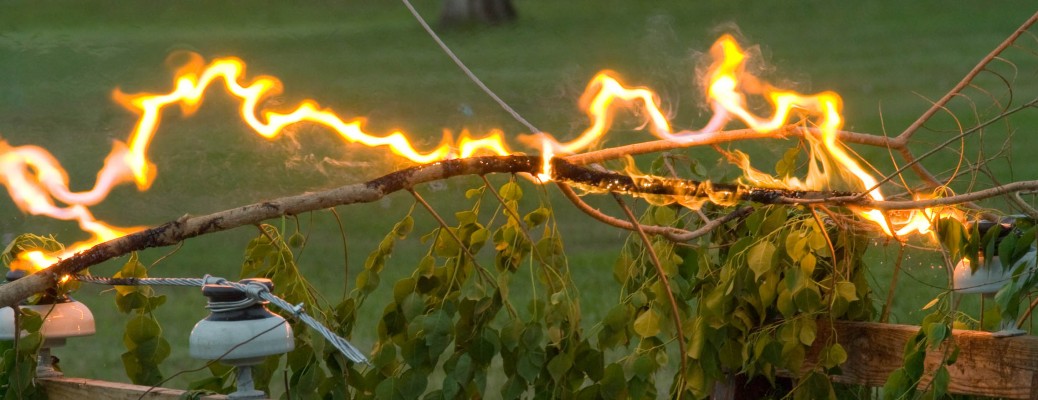
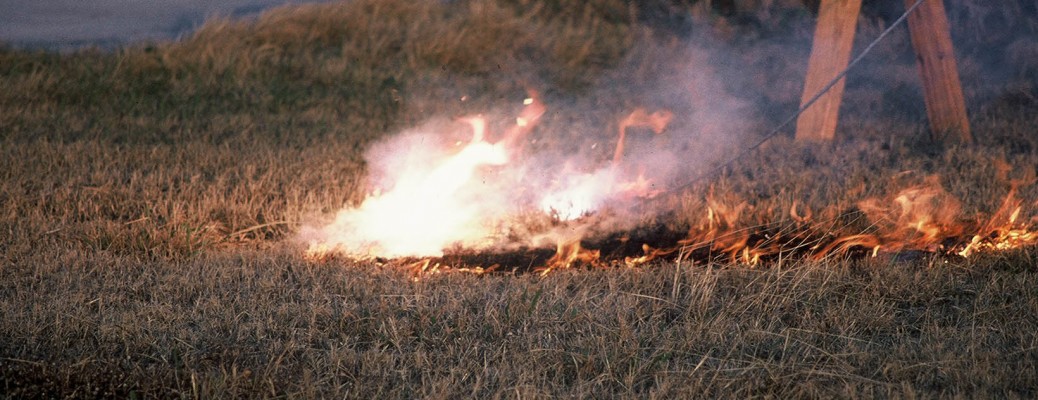
For over 20 years, the Power System Automation Laboratory of the Department of Electrical and Computer Engineering at Texas A&M University has been engaged in the investigation of powerline-caused wildfires. Approximately 8% of wildfires are attributed to faults and failures associated with the electric power system. Research has focused on identifying ways and means to mitigate wildfire ignition by identifying and repairing failing devices and incipient faults at an early stage.
In 2012, more than 4,000 powerline-caused wildfires were documented to have occurred in Texas in the previous three years, costing the state and its citizens hundreds of millions of dollars. In response, the legislature appropriated funds to demonstrate new technologies to detect ignition mechanisms to mitigate wildfire risks and losses. The project initiation meeting occurred in December 2013, at PUC headquarters in Austin. The wildfire mitigation project was conducted over a three-year period and engaged seven utilities in the state.
In cooperation with over 25 utilities, the A&M research team has monitored over 500 electric circuits on a continuous basis creating the largest database in existence of fault and failure records. This data has resulted in a deep understanding of how powerlines cause wildfires and how these ignitions can be mitigated. The research resulted in the development of the Distribution Fault Anticipation (DFA) system. This technology provides utility operators a continuous, real-time health monitoring of circuits with automatic identification of failing devices that could be wildfire ignition mechanisms.